The spring: two paths of AI integration
I tried to make an infographic about how companies adopt AI. It went off the rails in exactly the way the companies do. So I kept it.
I'm a terrible artist and a terrible graphic designer. With the power of AI, I can now create sleek infographics like this one.
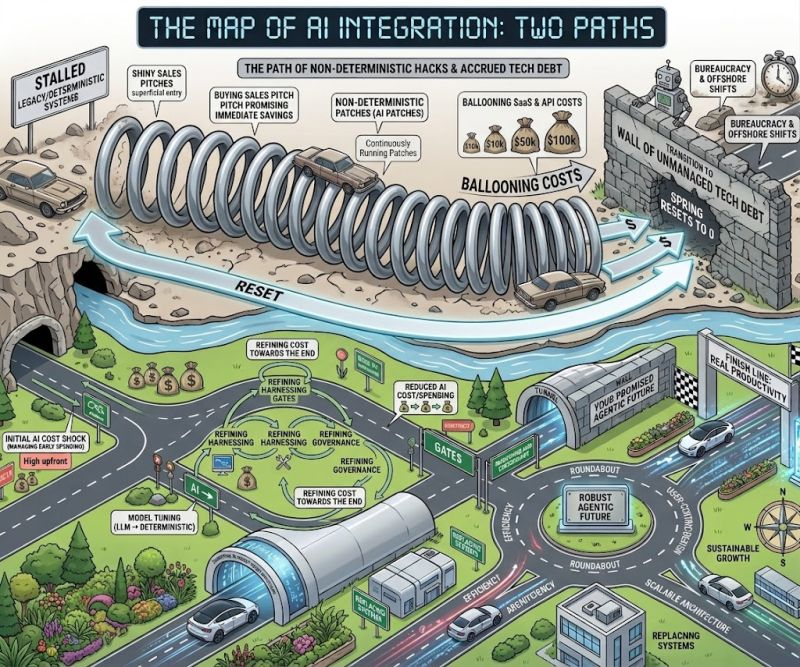
I started with a pretty decent idea. I wanted to show the two paths I think companies can take with AI. The common path is a compressing spring: quick wins stacked against mounting costs and debt, until it snaps back.
I think this is the path most companies are on today:
- Reducing AI spending where it matters, without understanding the cost and the benefit.
- Spending even more on AI solutions layered on top of already expensive SaaS tools.
- Offshoring development to low-cost resources while the spring is still compressing.
The image above is a great representation of that compression in action. Just not in the way I intended.
How the image went off the rails
I didn't understand my image model or the technology before I started, and the initial results looked great. I added features and ideas, and without looking closer, it started to look even better. The more I built, the more it went off the rails. More prompt, corrections on top of corrections, mistakes compounding on mistakes.
I didn't add controls, governance, or intelligence. I didn't stop to see what it was actually pulling into context. I didn't even think about hiring a graphic designer who would do it correctly.
I was about to start over from scratch when I realized the image represents exactly where companies are about to find themselves.
What it was supposed to show
The top half is the spring compressing. We see quick AI gains and buy into the parlor tricks, the sycophantic models, the shiny sales pitches. We get AI sticker shock. We've bought all the wrong tools, but we keep compressing the spring. Buyer's remorse is real, so we cut the senior developers to reduce costs, because they seem to be slowing us down by suggesting things like governance and maintainability.
It kind of shows that. It also has cars driving on top of the spring, arrows pointing in strange directions, and labels that repeat themselves. It's a mess.
The bottom half was supposed to be one path with one roundabout. I put little thought into where I was going and just typed correction after correction. The model added random roads, tunnels, and paths that look good at first glance and are nonsensical on a second one. I never even got to topics like security.
I was ready to give up, dig in, and reset the spring.
What resetting the spring looks like
It means giving your developers the tools they actually ask for, and listening when they say they can justify the cost.
It means challenging every vendor product you buy and every AI tool that gets pitched, and actually understanding what you use each tool for.
It means research and iteration up front, with the understanding that not every dollar spent will end up producing value.
If you're a developer or an AI decision-maker at one of these companies and you're starting to feel that spring compress: drop the buyer's remorse and let the spring reset.
LinkedIn version
Hook-first, ~436 chars, ready to paste.
“I'm a terrible artist. With AI I can now make sleek infographics.”
Get new posts in your inbox
One email when something new ships. No drip sequences, no “quick question” follow-ups.